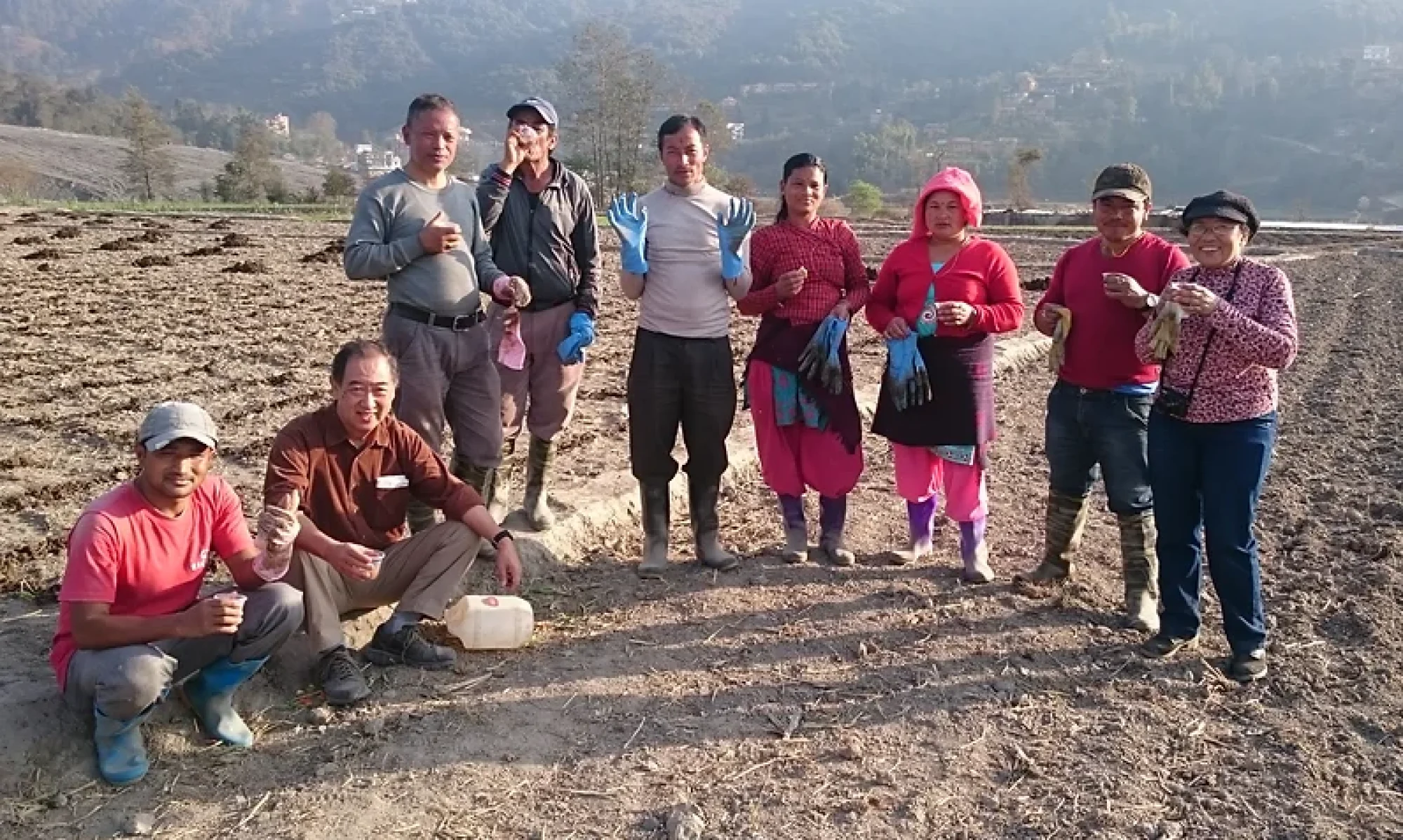
Surja氏が提起した問題を踏まえ、サンクーの農業の価値を高めるための一つの方法として、「サンクージャガイモ生産者協会」の設立を提案します。この協会は、サンクーで生産されるジャガイモの付加価値を高め、この都市の農業遺産を守ることを目指します。協会のメンバーとして、サンクーで何を達成したいのか、何ができるのか、そして組織の核となる使命は何であるべきか、じっくり考えてみてください。
サンクーにおける農業の持続可能性には、稲→夏ジャガイモ→冬ジャガイモという作付けパターンが依然として重要であると認識しています。効率的な水利用の観点から、皆様の農業は高い生産性を実現しています。灌漑用水路を守ることは、サンクーの歴史と文化を守ることにも繋がります。農業はこの小さな町にとって重要な役割を果たしています。生計の糧となるだけでなく、何世代にもわたってこの地域を支えてきた水循環と深く結びついています。サンクーはラージ・クロ運河(王運河)で有名です。この素晴らしい水路システムを守ってきたのは農民たちです。最近まで、町の水路は美しい自然石で覆われていました。今後、新しい排水システムが建設されるかもしれませんが、この地域を養い続ける水循環の重要性を決して忘れてはなりません。
サンクーは豊かな歴史と文化に恵まれています。バジュラヨギニ寺院、サリナイ寺院、そしてユネスコ世界遺産のチャング・ナラヤンはすべて徒歩圏内です。町の中心には、何世代にもわたる人々の生活と、あらゆるトールにある祠、寺院、ガートといった共有空間があり、コミュニティにとって安らぎと繋がりの場となっています。
サンクーにおける農業の存続を確実にするためには、創造性と革新が不可欠です。収益性を高める戦略が必要です。有望なアプローチの一つは、ジャガイモを付加価値の高い製品に加工することです。農家は、生のジャガイモを販売するのではなく、市場向けに新たな形に変えることができます。
サプライバリューチェーンは、 生産者→ 仲介者 →消費者
に 生産者 →シェフ(特別なポテト料理を作る人) → 消費者。
つまり、ジャガイモをフライドポテトやコロッケ(コロッケ)などの商品に加工し、直接販売するということです。このような小規模事業は農家の収入増加につながります。加工によって付加価値が生まれるため、利益は中間業者に流れることなく生産者のもとに残ります。付加価値のある商品を作ることで、サンクーのジャガイモの知名度を高め、地元農家の経済的豊かさを支えることができるのです。
「ブランディング」を重視するのは、決して特別なことではありません。まず第一に、ジャガイモの品質を保証するために、生産地(サンク)や農薬使用量、ジャガイモの品種特性といった重要なポイントを消費者に明確に伝える必要があります。さらに、加工に使う油の品質も透明化する必要があります。次に、独自の味覚体験を創出する必要があります。つまり、特定の店舗でしか手に入らないポテトチップスを提供するのです。バター、チーズ、スパイスといった原材料はすべて地元産であることを強調します。例えば、バター味、チーズ味、チリ味など、サンクならではの味をアピールしましょう。これは、サリナディ寺院やバジュラヨギニ寺院などの地元のお祭りで、期間限定のファームレストランをオープンするといった小さなビジネスから始めることができます。人々がそれを食べて気に入ってくれれば、自然と人気が高まります。これは、女性にもビジネスに参加する機会を与えることにもなります。サンティさんの手料理は美味しく、彼女をはじめとする人々には大きな可能性を秘めています。
重要なのは、これらの食品をサンクー・ポテト生産者協会のブランドで販売することです。これは単なるビジネスではありません。地域コミュニティの取り組みです。農家だけでなく、サンクーの非農業住民も参加し、地元の農業を守ることに尽力している協会です。サリナディ寺院近くのレストラン(ここのチャイは絶品です!)のシェフに「コロッケ」を作って販売してもらってはいかがでしょうか?スンダルさんの店の前のレストランも素晴らしいですよ!(ちなみに、食文化が根付いたイタリアでは、高級オーガニック食品店が観光客に大人気。街の歴史や文化を反映した空間で、Ga-ichiさんが「じゃがいも料理」を紅茶やコーヒー、地ビールとともに提供してくれるようなお店ができたら嬉しいですね!)
製品の価格を安定させることができれば、有機農業のような低投入・低生産モデルを採用できるでしょう。有機製品は健康志向の消費者に好まれることが多いものの、高額な価格を支払える人の数は限られています。地元のフェスティバルで料理を振る舞うことから始めることで、そのギャップを埋めることができるかもしれません。これは市場をテストし、ファンを獲得する方法です。私がかつて住んでいたカリフォルニアの小さな大学町にあるファーマーズマーケット(https://www.davisfarmersmarket.org/about-us/)の活動にも興味があるかもしれません。美味しく、楽しく、そして充実した時間を過ごせます!
もちろん、お祭りは家族にとって大切な行事であり、知らない来客のために料理をする時間がないこともあるでしょう。しかし、祈りに来た人々に食事を提供することは、おもてなしの行為であり、サンクー・ポテト生産者協会の会員としてのリーダーシップと献身を示す方法でもあります。
In light of the issues raised by Mr. Surja, I propose one possible approach to enhancing the value of agriculture in Sankhu: the formation of “Sankhu Potato Growers Association.” This organization would aim to add value to the potatoes produced in Sankhu and protect the city’s agricultural heritage. As members of this association, please reflect on what you want to achieve in Sankhu, what you are capable of doing, and what the core mission of your organization should be.
We recognize that the cropping pattern of paddy → summer potato → winter potato remains crucial for the sustainability of agriculture in Sankhu. From the perspective of efficient water use, your farming practices have achieved high productivity. Preserving the irrigation channels means preserving the history and culture of Sankhu as well. Agriculture plays a vital role in this small city. Beyond providing a livelihood, it is deeply connected to the local water cycle, which has sustained the area for generations. Sankhu is renowned for its Raj Kulo, King Canal. It is the farmers who have safeguarded the city’s remarkable canal system—until recently, the town’s water channels were lined with beautiful, natural stones. While new drainage systems may be built in the future, we must never forget the importance of the water cycle that continues to nourish this community.
Sankhu is rich in history and culture: the Bajrayogini Temple, the Salinai Temple, and the UNESCO World Heritage Site Changu Narayan are all within walking distance. At the heart of the town are generations of lives and shared spaces—shrines, temples, and ghats in every tole—which serve as places of comfort and connection for the community.
To ensure the survival of farming in Sankhu, creativity and innovation are essential. Strategies to boost profitability are needed. One promising approach is to process potatoes into value-added products. Rather than selling raw produce, farmers can turn potatoes into new forms for market.
The supply value chain shall be changing from
Producers → Intermediaries → Consumers
to
Producers → Chef (who cooks special Potato Dishes) → Consumers.
In other words, potatoes could be processed into products like fried potatoes or croquettes (korokke) and sold directly. This kind of small-scale business increases the farmer’s income. The added value comes from processing—the profit stays with the producer, rather than being lost to middlemen. By creating value-added products, we can raise the profile of Sankhu’s potatoes and support the economic well-being of local farmers.
The emphasis on “branding” is nothing extraordinary. First and foremost, in order to guarantee the quality of potatoes, we need to clearly communicate certain key points to consumers—such as the place of production (Sankhu), the level of pesticide use, and the characteristics of the potato varieties. Additionally, the quality of the oil used in processing should also be transparent. Next, we should create a unique flavor experience. In other words, offer potato chips that are only available at a specific shop. Highlight that ingredients such as butter, cheese, and spices are all locally produced. Examples could include butter flavor, cheese flavor, and chili flavor—all unique to Sankhu. This can begin as a small business—for instance, a limited-time Farm Restaurant stall at local festivals like those at the SaliNadi and Bajrayogini temples. If people taste it and like it, it will naturally gain popularity. This also opens up opportunities for women to participate in business. Santi’s home-cooked food is delicious—she and others have great potential!
The key is to market these foods under the Sankhu Potato Growers Association brand. This isn’t just a business. It’s a community effort—an association that includes not only farmers but also non-farming residents of Sankhu who are committed to protecting local agriculture. Why not ask the chef at the restaurant near the SaliNadhi temple (they make great chai!) to create and sell “Korokke”? The restaurant in front of Sundhar’s shop is also excellent!
(As a reference: In Italy, where food culture is deeply rooted, upscale organic food stores are incredibly popular among tourists. I would love to see something similar here—serving “potato cuisine” along with tea, coffee, or local beer by Ga-ichi, in a space that reflects the history and culture of the city!)
If we can stabilize prices for our products, we could adopt a low-input, low-output model, such as organic farming. While organic products are often favored by health-conscious consumers, the number of people who can afford premium prices is limited. Starting by cooking and serving food at local festivals might help bridge that gap—it’s a way to test the market and build a following. You may also find the activities of the Farmers Market (https://www.davisfarmersmarket.org/about-us/) in the small college town of California, where I used to live, to be of interest. Delicious, fun, and enriching!
Of course, festivals are important family occasions, and you may not always have time to cook for guests you don’t know. However, providing food to those who come to pray is an act of hospitality—and also a way to prove your leadership and commitment as a member of the Sankhu Potato Growers Association.